Break the Cycle of Poor Sleep Among Students at Sul Ross
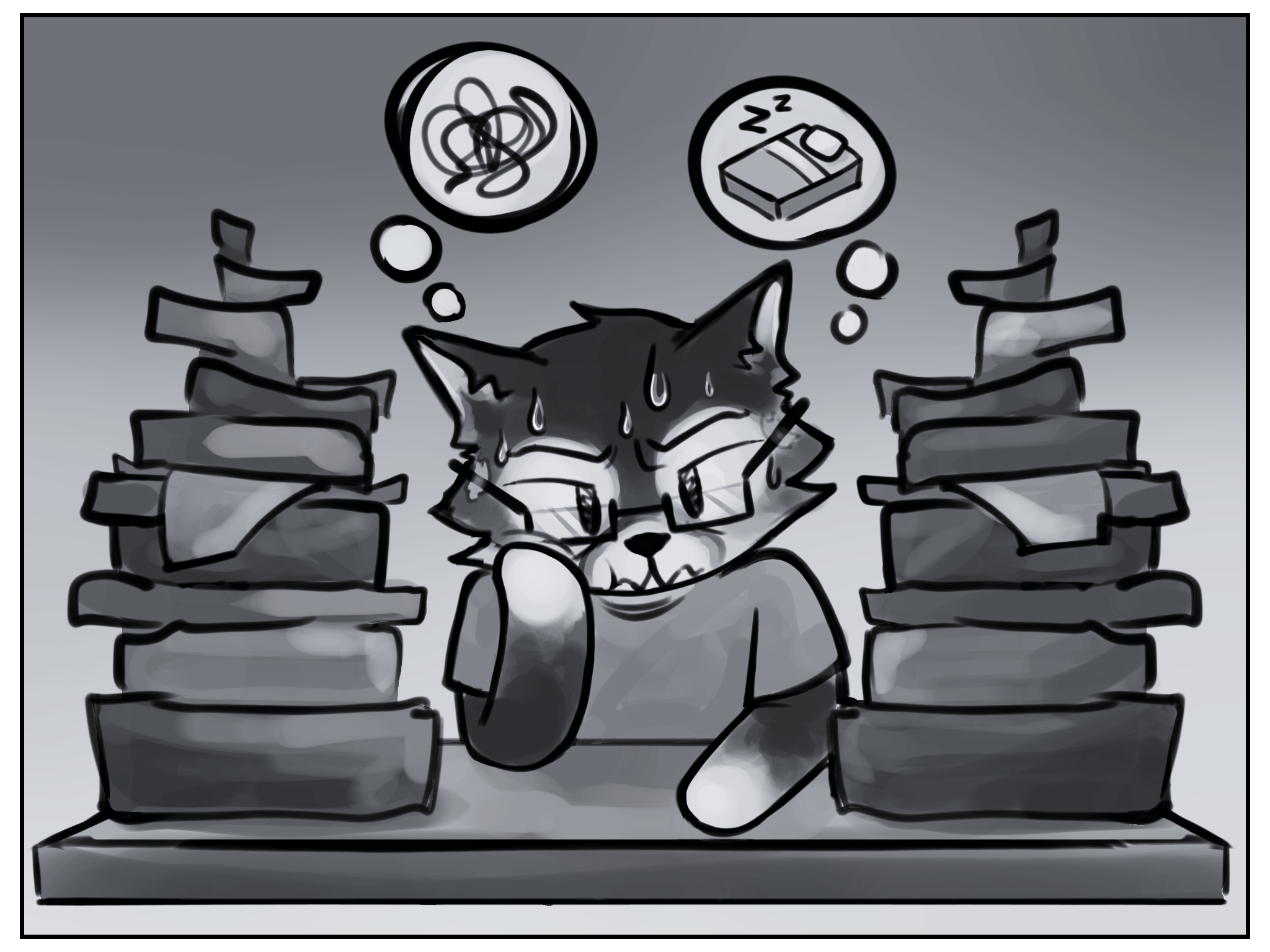
Original illustration by Max Barraza, Skyline Cartoonist
By: Libby Foster, Skyline Contributor
ALPINE – Only 30.4% of Sul Ross students achieve normal sleep quality while 69.6% fall into clinically poor range, according to Fall 2025 research conducted by student athlete Ariana Escalante using the Pittsburgh Sleep Quality Index.
The research sought to analyze how sleep is associated with mental health, regulatory behaviors, and student’s overall performance in academics. One major finding was the indirect effect sleep has on academic success: poor sleep quality affects daytime sleepiness and mental health, which in turn influences regulatory behaviors such as procrastination. Through this task avoidance, students' confidence in their academic abilities is impacted.
Ariana’s research also examined psychological factors, specifically self-efficacy, the confidence a student has in their own abilities. Her findings indicate procrastination was the strongest predictor of a decrease in academic self-efficacy, where academic self-efficacy was linked to students' GPA. Furthermore, the data showed a gendered trend specifically in females, where poor sleep was more strongly associated with increased anxiety and a tendency for higher depressive symptoms.
Ariana chose this topic because of her background as a patient advocate. In her childhood, she struggled with Central Sleep Apnea, a sleep disorder where the brain fails to send proper signals to induce breathing, causing frequent awakenings. Ariana says she hopes her research will help students understand that sleep is a foundational pillar of overall wellness.
Her sample included 79 Sul Ross students, 19 of whom were athletes. Athletes reported lower levels of procrastination, which Ariana attributed to the necessity of time management. Ariana said, “Athletes lack the time to procrastinate due to demanding schedules; when given an opportunity, work simply needs to get done.”
While athletes reported lower levels of procrastination due to their structured schedules, they are not immune to sleep struggles. Ariana personally noted that late evening practices running from 6 p.m. to 8 p.m. followed by early morning training can make rest difficult. This is significant, as research shows that high-level physical activity three to four hours prior to bedtime can disrupt sleep cycles.
The study also compared variables among students on-campus, off-campus, and those commuting. On-campus students had the lowest levels of procrastination, likely due to the structure and accessibility of student support services. Off-campus and commuting students tend to have higher procrastination, due to other responsibilities such as jobs and barriers to campus resources.
Perhaps one of the most concerning findings of Ariana’s research is that 40% of the student sample reported clear symptoms of insomnia, taking more than 30 minutes to fall asleep two times a week. Ariana suggests that many of these issues likely stem from a lack of knowledge regarding proper sleep hygiene.
To help students reclaim their sleep, the National Sleep Foundation recommends these 5 tips for better sleep: establishing a relaxing bedtime routine, maintaining a consistent sleep-wake schedule; even on weekends, exercising regularly, power down electronics before bed, and prioritizing the recommended number of hours of sleep.
Overall, Ariana’s research offers a clear wake-up call for the Sul Ross State student community. If you are struggling to keep up with deadlines, the first thing you should check isn’t your calendar, it’s your sleep.