By: Salisa Wellenreuther, Skyline Reporter
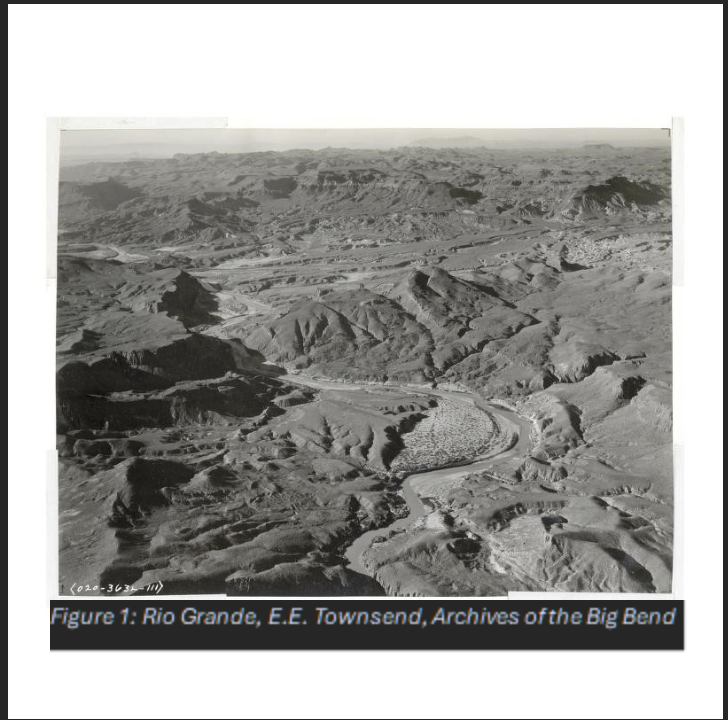
ALPINE – The Archives of the Big Bend was established in 1975 within the Bryan Wildenthal Memorial Library and recently celebrated its 50th birthday. The ABB has served as a repository for not only Sul Ross State University records, but also as the regional archives for the entire Big Bend region. According to the ABB website, the Archives’ goal is to collect and preserve research materials that showcase the culture and history of the Big Bend region. Big Bend National Park is not only a namesake for the archives, but also one of the most prominent subjects of research.
Lovers of Big Bend National Park have been protesting the construction of a 175-mile border wall through the iconic Trans-Peco landscape. U.S. Customs and Border Protection awarded Southwest Valley Constructors, already known for previous border wall projects, $1.72 billion to construct the Big Bend border wall. Although construction has not yet occurred in many places, the presence of heavy machinery around many archaeological sites, including those that are associated with indigenous groups, has struck fear and outrage into the hearts of nearby residents.
According to the National Park Service website, Big Bend is often referred to as “Texas’s Gift to the Nation.” It has a rich history linked to Native Americans, primarily the Comanche and Apache tribes. Recently, a nonprofit working to preserve indigenous sites called The People for La Junta Preservation as well as members of the Lipan Apache have launched lawsuits against the Department of Homeland Security as well as other federal agencies to stop construction in Big Bend.
The plaintiffs claim that the construction is a violation of the Religious Freedom Restoration Act as well as the American Indian Religious Freedom Act protections. The claim also states that due to U.S. Customs and Border Protection (CBP) activities they have been cut off from their spiritual practices.
When asked about the archeological and historical impacts of building a wall through Big Bend, Sul Ross student and prominent member of the Archeology department, Bailey Larremore told the skyline, “This wall will cause irreparable damage to critical locations unsurveyed for their anthropological significance. The Rio Grande’s boundaries are of particular interest to local anthropologists and there have been significant finds.”
At a campaign event last weekend, Democrat congressional candidate Katy Padilla Stout addressed the issue of construction of the wall in Big Bend. When asked about her stance on the desecration of indigenous land within Big Bend National Park, Stout told the Skyline, “We would honor the indigenous groups we (America) committed atrocities against by preserving that land.” Stout also revealed that the contract for the construction of the wall in the Big Bend has not been seen by anyone not directly involved, raising suspicions towards participating companies.
The contrast between the Archives of the Big Bend celebrating fifty years preserving the history of Big Bend National Park and the CBP’s attempts to disrupt the national landmark do not resonate well with many members of the Alpine community. Even so, because there are very few illegal border crossings at Big Bend. Though the National Park Service has acknowledged that crossings are possible, the natural landscape acts as a dangerous deterrent.
Larremore concluded their interview saying, “(Big Bend) has a deep and rich history spanning from 12,000 years ago and for the administration to believe that a wall should be built and destroy and divide that history is an atrocious crime to the study of archeology.”